
How US Restaurants Lower Food Cost Using Bulk Spices (With Real Numbers)
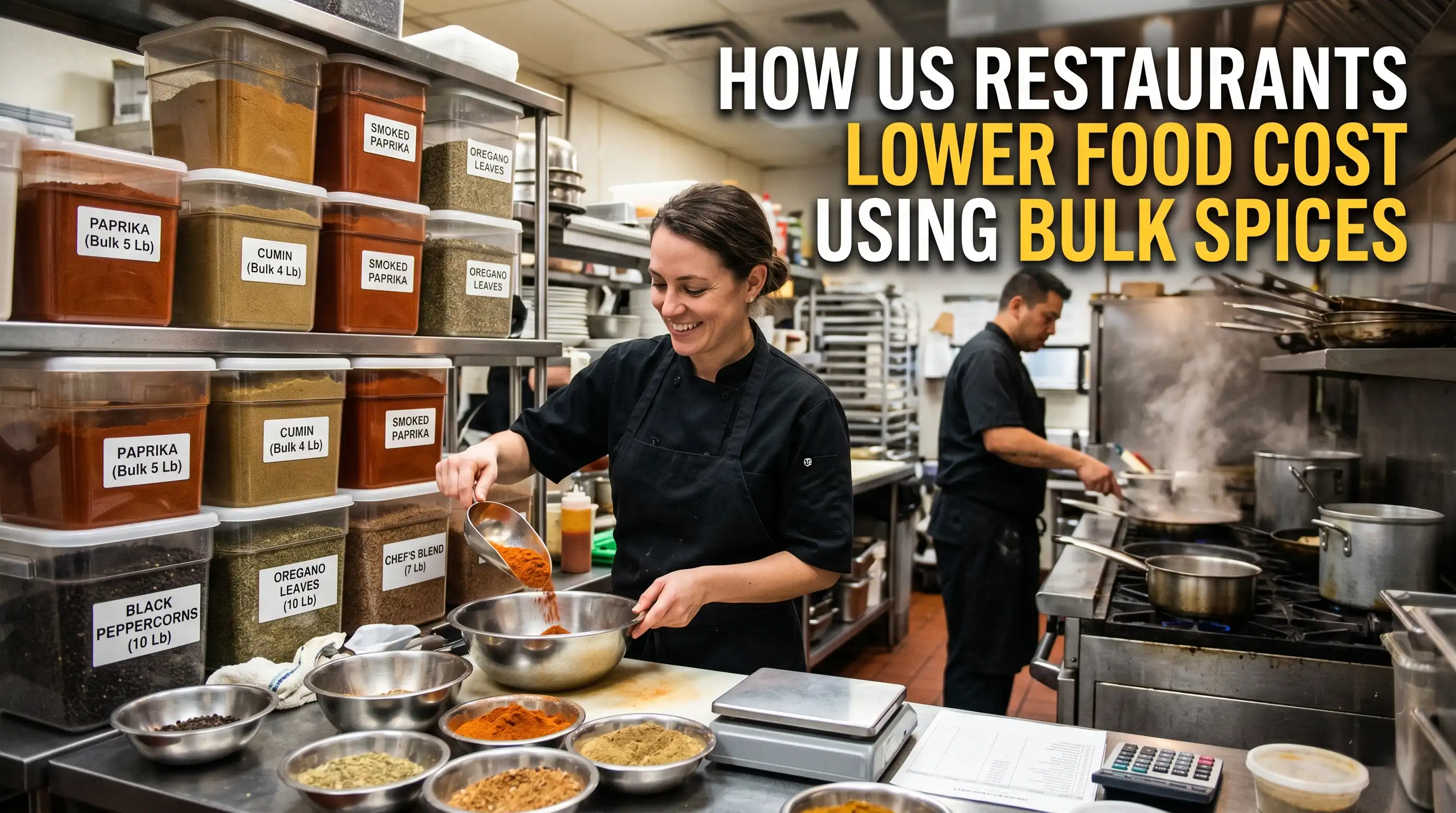
The Silent Profit Killer in Your Kitchen
You just finished a record-breaking Saturday night. Every table was turned three times, the kitchen was a well-oiled machine, and the register is full. But when you look at your bank balance at the end of the month, the numbers don’t match the hustle.
For many restaurant owners, the gap between high revenue and low profit is caused by a single, often misunderstood metric: the food cost percentage. If you aren't tracking this number weekly, you aren't running a business—you're running a charity.
Understanding the Restaurant Food Cost Percentage Formula
To fix your margins, you first need to know where you stand. The restaurant food cost percentage formula is the most critical tool in your financial arsenal. It tells you exactly how much of every dollar earned is being eaten up by your ingredients.
The formula is:
((Beginning Inventory + Purchases) - Ending Inventory) / Total Food Sales = Food Cost Percentage
For example, if you start the week with $5,000 in stock, buy $2,000 more in supplies, and end with $4,000, your Cost of Goods Sold (COGS) is $3,000. If your sales were $10,000, your food cost is 30%.
In the U.S. restaurant industry, a healthy food cost typically sits between 28% and 35%. If you are hitting 40% or higher, your "small" expenses—like those expensive 5lb spice containers from a local retail-heavy distributor—are likely the culprit.
The Hidden Impact of Spice Sourcing on Your Bottom Line
Spices are often treated as a "minor" expense because they don't take up much space. However, for Indian restaurants, caterers, and food trucks, spices are a primary cost driver.
When you buy spices in small quantities or through multiple middlemen, you are paying for: - Excessive packaging - Multiple layers of distributor markups - Inconsistent quality that leads to kitchen waste
Switching to bulk spices through a direct-from-source model doesn't just lower your unit price; it stabilizes your entire menu. When you source wholesale spices directly, you eliminate the 20-30% markup added by local "cash and carry" stores.
Real-World Example: The Cost of Consistency
Let’s look at a high-volume Indian restaurant in Atlanta serving 500 plates of Chicken Tikka Masala per week.
- Retail/Local Sourcing: Buying 1lb jars of Garam Masala at $18/lb. Total monthly spice cost: $720.
- Bulk Wholesale Sourcing: Buying 25lb bags of the same high-quality blend at $9/lb. Total monthly spice cost: $360.
By making one change in restaurant supply strategy, this owner saves $360 a month on a single spice blend. Across an entire menu of 20+ spices, that’s over $4,000 in annual profit added directly back to the bottom line without raising menu prices by a single cent.
Actionable Steps to Lower Your Food Cost
- Audit Your Spice Rack: Identify your top five most-used spices (e.g., Turmeric, Cumin, Chili Powder).
- Calculate Your Plate Cost: Use the restaurant food cost percentage formula for your signature dishes. Are your spices costing you $0.10 per plate or $0.50?
- Consolidate Your Orders: Instead of buying "as needed," move to a monthly bulk ordering system to save on shipping and transaction fees.
- Verify Your Source: Ensure your supplier provides consistent batch quality. Inconsistent spices lead to "re-fires" in the kitchen, which doubles your food cost instantly.
Partnering for Profitability
Managing food costs is a constant battle, but your supply chain shouldn't be an obstacle. At Borah Spices, we help U.S.-based restaurants and distributors bypass the middlemen. By sourcing directly from India and coordinating through our Atlanta-based team, we provide the consistent batch quality and wholesale pricing needed to keep your food cost percentage in the "green" zone.
Whether you need bulk whole spices or custom private label blends, the goal is the same: better margins and better flavor.
Conclusion
Your food cost isn't just a number on a spreadsheet; it’s the pulse of your restaurant’s health. By mastering the restaurant food cost percentage formula and optimizing your sourcing for high-impact ingredients like spices, you can stop wondering where the money went and start growing your business.
Interested in bulk spices?
Contact us to discuss your wholesale requirements and request free samples for your business.
Request free samples